Showing posts with label consent culture. Show all posts

Sunday, December 30, 2012

A puppy, and maybe-jokes.

I just got back from Christmas with Rowdy's family!  It was happy and cozy and his parents cooked like they were fattening us up to eat us.  And Rowdy gave me a 350-million-year-old fossil trilobite for a present. It was good times. I hope you all had good times in your own ways as well.

Rowdy's sister and her husband stayed with the family as well, and they brought a puppy with them!  An adorable, hyperactive, cuddlywuddly, toe-nipping little puppy!  (They were claiming it was an "Olde English Bulldogge," but it was clearly not.  We're guessing boxer-pitbull mix.  Cute, whatever it was.)  This struck Rowdy a little bit odd, because his sister never liked dogs.

So Rowdy asked his brother-in-law what was up.  He said, laughing, "Your sister said the only way we'd ever have a dog is if I'd already brought one home and she had no choice.  The next day, I brought home the puppy!"

Ew.

Concerned, Rowdy asked his sister about this, and she said, "Oh, we talked for a long time about getting a dog and we agreed we'd do it around now.  I didn't use to be a dog person, but I love this puppy!"

Huh.

The brother-in-law had been kidding, but the weird thing is, he was kidding in a way that made him sound like a kinda scary asshole.  He would've come off as a much better person if he'd told the truth.  So why did he make up this story about forcing an unwanted burden on his wife?  And why, on some level, does the fact that he made up the story not really bother me, but strike me as a pretty ordinary bit of humor?


There's this widely told jokey narrative that marriage is a state of passive-aggressive warfare where the wife has to be pressured into allowing fun things and the husband has to be nagged into doing responsible things.  People in relationships, good and bad, joke about getting along like the Lockhorns.  See also: every sitcom ever, every issue of Cosmo ever, every social gathering where "my husband is such a manchild/my wife is such a ball-and-chain" is a joke about as edgy as "airline food tastes bad."

The problem is, it's not a joke for everyone.  It's one of those insidious things that hits some people as "ha ha, yeah, I kid about him being a manchild, but really we talk stuff out," and hits others as "so I see, husbands are supposed to be irresponsible and you're supposed to berate them for it."  Even though Rowdy's brother-in-law wasn't really coercing his wife into a major responsibility she didn't want, he was cheerfully playing into a story created by, and validating for, men who really would.


Credit where credit's due, this is Rowdy's theory: One of the major steps toward creating a consent culture is making consent look different from coercion.  It's making a man who respects his wife's right to participate in decisions sound so different in casual conversation from a man who doesn't, that no one could confuse them.

Because our values aren't that screwed up, really.  If you ask people, point-blank and not-joking, if a man should listen to his wife when making a decision that affects her life, people are going to say yes.  Most people--even most not-at-all-feminist people--are going to say, yeah, of course that's basic respect.

So imagine a world where it was really, really obvious who respected their wife (husband, partner) and who didn't.  If people who respected their partners never told these maybe-jokes, people who didn't wouldn't have that maybe-joke plausible-deniability to hide behind.  They'd either have to tell outright lies (which some would, but it would require them to be consciously aware that they had something to lie about) or their "she didn't want it, but I did it anyway" story wouldn't be jokey, it would be a straight-up confession of evil.

Making the distinction between respectful and abusive relationships blunt wouldn't end abusive relationships.  But it sure as hell would make them a whole lot less popular at parties.

Friday, December 14, 2012

We are the 95%.

TRIGGER WARNING FOR RAPE on all that follows, including all links.

[I wasn't going to write this post today. Believe it or not, I really don't like writing about rape so much. I want to write more about good happy kinky sex. But then all that stuff with the Good Men Project kinda blew up in my face, and this is the post you got.]


There's one big lie that rapists tell.  Most of the other lies are just part of it.  "Consent is complicated and confusing and there are a lot of gray areas."  "She dressed/acted/talked like she wanted it."  "She never said no; how was I supposed to know?"  "She just regrets having sex."  "We were both drunk and the alcohol muddied things."  "He sure seemed like he was enjoying it."  "I guess I just got caught up in the heat of the moment."  "People do this all the time and only paranoid feminists call it rape."

The one big lie at the center of all these little lies is: "If you were in my place, you could have done the same."

I mean, who among us has not been confused in the process of sexual communication?  Who has not thought someone was interested in them and then found out they read the signals wrong?  Who has not had a partner enjoy sex less than they'd hoped?  Who has not felt "swept away" at some point during sex?  Who has not done something stupid while drunk?  Who has not felt that the things their ex said after the breakup were awfully unfair? The rape-apologist narrative taps into some nearly universal experiences.

And then, in that one big lie, pretends that these everyday insecurities and disappointments could lead anyone to rape.  "It could have happened to anyone," say the rapists.  Especially to men.  And to themselves.

Here's the truth, though, from some pretty major studies:
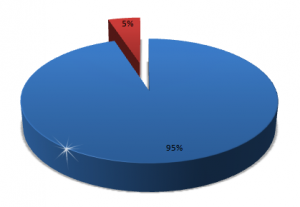
Between 6% and 13% of men have attempted or completed rape.  4-8% of men are serial offenders, and responsible for the vast majority (90-95%) of all rapes.

I realize these numbers are still uncomfortably high, especially if you have twenty male friends.  But they also mean that 94-87% of men are not rapists.  Add in women (who do rape, but at a lower rate), put in some fuzzy math and broad guesses to get a good-enough ballpark, and roughly 95% of people never attempt or commit rape.

So when you hear all the totally plausible ways it could have been you, realize: nope, probably couldn't have been.  Most people don't struggle not to commit rape.  Most people don't have trouble understanding sexual refusal.  The vast majority of people go through drunken blunders and miscommunication and bad breakups without committing or being accused of rape, just as the vast majority of people don't have trouble restraining themselves from torture or murder.

And forget the numbers for a second.  If you, personally, make a commitment to never have sex without unambiguous consent, your odds of being a not-rapist are 100%.  It can't "happen to you" if you decide not to do it.


This is part of why I talk about consent so much.  It's not just to keep well-intentioned guys from accidentally raping.  Most well-intentioned guys don't really have that problem.  It's to help well-intentioned guys (and girls, and everyone else) see how vast the gulf is between them and rapists.

If affirmative, negotiated, freely given consent is the norm, then rapists lose the ability to say "I just didn't know."  They can no longer make anyone think "but regular sex looks practically the same."  If romance doesn't work a damn thing like rape, rapists can't hide behind "I was trying to be romantic."

Clear consent does make sex better, and it does prevent legitimate-yet-horrific misunderstandings. But that's not all of what it's for.  It's also so that rapists can't say--to us or to themselves--"I thought we were just having sex."


Only 5% of people commit it, but everyone lives with the effects of rape.  Because of this small minority of predators, everyone has to live in a world where they will have a sibling, spouse, child, parent, friend who's a survivor of sexual assault.  Everyone has to live in a world where women are told to live in fear of rape.  Everyone has to know a family, social group, school, political party that's been torn apart by bitter hostility between survivors and their supporters and predators and their defenders.

Because a lot more than 5% of people have been suckered in by the rapists' big lie.  A lot more than 5% of people talking about any case of rape in the media or their social circle start saying "sounds like a grey area to me," and "she really did send some mixed signals" and "do we have to be so hard on the guy?"  A lot more than 5% of people treat rapists with sympathy and survivors with skepticism, because they're thinking "shit, in a situation that confusing, it could have been any guy; it could have been me."

But 95% of the time, it couldn't have been.

We are the non-rapists, the people who will never commit rape and who suffer from the actions of those who do.  Imagine what we could get done if we presented a united front, and the rapists had no one but other rapists to defend and enable them.  We are the 95%.  Let's fuckin' act like it.

Monday, May 14, 2012

Real consent.

tumblr user laceandcombatboots
EDIT: Okay, some people are linking to this with the wrong intentions. I need to clarify.  This is NOT NOT NOT saying that any time the word "yes" comes out of a person's mouth under any conditions, that counts as consent.  Consent that's ambivalent or reluctant or resigned isn't "not enthusiastic," it's not consent.  All I wanted to say with this post is that there are multiple ways consent can be valid--not that everything remotely consent-ish is valid.

 There are also multiple ways a "yes" can be not-consent, and until you know someone really well and have communicated with them really openly about their motivations and convinced them really thoroughly that everything will be 100% fine if they say "no"--you need to hold out for the "YES FUCK ME NOW" consent.

So if you're linking this post to prove a point about "but they said yes, so is it really rape?" ...Fuck off.


I'm starting to have a problem with the phrase "enthusiastic consent."  It's well-meant, certainly: it's supposed to connote consent where the person consenting really means it, as opposed to situations where someone says "yes" out of fear or obligation or confusion or some other crappy reason that isn't "actually wanting to have sex."  I'm all for that, obviously, but the phrase sucks.  The phrase implies that you have to be horny to consent to sex, that the only real consent is consent given when not just agreeing to sex but craving it.

The problem is that this doesn't respect the agency of the person consenting.  It ignores the ability of a sober adult to say "I don't want this with my crotch, but I'm agreeing to it with my brain."  It tells people "You say you're consenting, but I know better, you poor dear."  And that's pretty shitty.  As someone who consents to things most people would consider gross or unpleasant (I've heard way too many times a woman can't really want to be punched black and blue) I'm in no position to tell someone else their consent isn't real. If you're unsure if your partner wants it or is just going along with it, lack of enthusiasm definitely means you need to stop and clarify--but it doesn't mean they can't clarify "yes, actually I do want this."

Which is not to say "yes" is a magic word that always makes everything okay.  But what matters isn't "enthusiastic consent" but simply "real consent"--consent that's given freely and sincerely.  Consent that someone gives because they're afraid they'll be physically or emotionally attacked if they don't isn't real consent.  Consent that's given when someone is incapable of understanding what they're agreeing to (because they're drugged, or they're a child, or they're saying "yes" to a different thing than will actually be done to them) isn't real consent.  And obviously consent that's withdrawn or never given at all isn't real consent.


But here are some examples of consent that can be very real, yet not enthusiastic:

• Consent to sex in order to conceive a child.

• Consent to sex or play to make a partner happy.  This is a tricky one, because the line between "I wanted to make them happy" and "I was afraid to make them unhappy" can get messy.  But consent to "I don't think I'll get pleasure from this, but I still want to give pleasure" definitely can be real.

• Consent to sex work. Sex work can be coercive, but it's not inherently, and drawing that line at "sex work is coercive if the sex worker isn't horny" is absurd.

• Consent to sex or play for curiosity's sake, despite a lack of physical desire.

• Consent to sex in a D/s relationship where the submissive agrees to sex they don't want as sex, but do want as an act of submission.


Grown-ups can decide why they want to have sex, and judging those reasons and whether they're "enthusiastic" enough is, frankly, none of my damn business.  All that matters is that they get to decide.

Friday, May 11, 2012

Asking.

I've mentioned a couple times that Rowdy and I, despite being together almost two years now, always ask for consent before sex.  I feel like sometimes that comes off a little pious, a little bit like this unsexy ritual we go through (or claim to go through) so we can achieve ISO 9000 Consent Compliance or something.

The truth is, though, that it's an incredibly simple and casual thing.  I mean, I ask "honey, do you want to go for a walk?" too; I don't just grab him by the arm and start dragging him down the street.  It's natural to ask someone before involving them in an activity.

We ask in different ways, too.

Sometimes we ask casual, and the answer is "well alright, sounds like a good time to me."
Sometimes we ask sexy, and the answer is "oohh God yes please now."
Sometimes we ask silly, and the answer is "yes, but without the ferret, okay?"
Sometimes we ask in whispers, and the answer is "...uh huh."
Sometimes we ask through kisses, and the answer is "mmmfffyesmmmfff"
Sometimes we ask pervy, and the answer is "yes Sir."

Sometimes we ask and the answer is "no."  Most of the time we're okay with that and cheerfully go on to other things.  Other times we're not okay with that and we feel unwanted or deprived or frustrated. But those feelings are still better than the way I'd feel if I realized I'd forced my beloved into something he didn't want.

I don't think I've ever made someone stop desiring me by asking.  I've only found out that they didn't desire me.  And holy shit, am I glad I did!  Whether as serious as keeping me from becoming a rapist or as bittersweet as turning sexual tension into "at least I know now," only good things have ever come from finding out someone doesn't desire me.


I've heard people say it's not sexy to ask.  I can't think of anything sexier than knowing my lover wants me.

I've heard people say it's not romantic to ask.  I can't think of anything less romantic than making your lover decide whether they're going to to yell "stop" at you or push you away or tolerate sex they didn't want.


I've heard people say "consent is sexy," but say it in that resigned sort of way, like "safety is sexy," that doesn't really mean it's boner sexy, just it's something they're sort of trying to promote.  I think they're doing it a goddamn disservice.

For me, consent isn't just sexy.  Consent is the only sexy thing.  My partner's desire, the fact that he wants me and wants this, is the only reason sex is better than masturbation.  I've got dildos, you know? I've got dildos in multiple sizes that vibrate and never go soft.  So my partner's body isn't a big deal to me.  The ego rush, the head rush, the racing heart and the throbbing crotch I get from sex all come from his enthusiastic participation--from the joy and the umf of knowing he wants me and the things he does because he wants me.

So fuck yeah Rowdy and I ask every time.  That's not a chore.  That's when I start getting wet.

Friday, April 20, 2012

The scene is not safe.

[Trigger warning for rape and BDSM abuse.]

I went to a sex party not long ago.  I talked to a bunch of the members and organizers of the group, and heard all around that they really value consent and they're super aware of feminist issues and the danger of abuse in sex-positive spaces.  I had a pretty good time, met a lot of people, hooked up with a dude, fit a humorous number of naked people people in a bathtub at the same time.

Days later I found out, almost incidentally, that one of the guys at the party had been ostracized from another scene for "some problems."  Some problems with boundaries.  I was a little ticked that no one had identified this guy to me.

Later still, I found out that the guy had raped a woman.

Oh, but, like, she only said he raped her and no one was there to see it and it was really confusing and stuff and anyway what do you want us to do, like, treat the guy like a leper?  He got kicked out of one scene already and that was like a couple years ago and we're trying to help him change and now he's okay as long as someone keeps an eye on him at parties.


Originally I had written a rant here.  I'm angry about this, is the short version.  I'm quite angry.  I'm angry because this isn't the first time I've been around a known abuser and nobody told me; I'm angry because I've been abused under the aegis of BDSM; I'm angry because so damn many of my friends have been abused in the scene; and I'm angry because if I used the guy's name in that story above, I'd be kicked out of the scene.

If you want the long version, Yes Means Yes spells it out here, in a post I think everyone in the BDSM/swinger/sex-positive communities should be reading.
The first step is admitting we have a problem.  And we do have a problem.  I’ll skip to the end: there’s no shortage of stories that start “I was abused” and end “when I tried to say something the community closed ranks around the abuser and I was frozen out.”  It’s happened to friends of mine.  It’s happened in communities where people insist that the community isn’t like that.  And almost always, you have to actually know the participants to know what happened because nobody talks about it.  It’s all secret, there’s no sunlight and no transparency.  You, you out there on the internet, can search blogs until you’re blue in the face for a record of some of these stories, or some indication that you shouldn’t play with some of these people, and you’ll never find it.  Even when “everybody knows,” the “everybody” is very narrow.
And much more.  Go read it.


In the meantime, I like the BDSM scene.  I like the sex-positive scene.  I love that spaces exist where I can be myself and spend time with people like me.  I don't want to leave.  I especially don't want to leave and let the abusers have it.

I also don't know how to fix it. I find the efforts to do so alternately inspiring and utterly frustrating.  I understand the problems that "expose and expel anyone with any accusation against them" would create and yet I hate the default solution of "therefore, keep all abuse secret and consequence-free."  And I also understand that anything framed in terms of accusations is only cleanup after abuse has already happened--a real "fix" would cut down how much it happens in the first place.


I have a few small suggestions that don't require involvement in the question of accusations*:

1. Let new people know the scene is dangerous.  Newcomers shouldn't be hearing "BDSM is all about consent."  Newcomers should be hearing "BDSM should be all about consent, but there are a few people here who won't respect that, and we don't know who they are."  We shouldn't be teaching new people to relax and take it all in stride; we should be teaching them to be wary as hell.  I'd rather feel like I'm scaring people off than feel like I'm luring them in.

2. But don't assume all newcomers are only potential victims; newbie education should also include teaching people how not to become perpetrators.  (I'm going to hopefully write my own thoughts on this soon.)  For three reasons:
a) It may, in fact, prevent some of them from becoming abusers.
b) Seeing things from the other side may make them better at recognizing abuse.
c) It takes away the "I didn't know that was a problem" excuse in a hurry.

3. Make audience-visible consent a part of BDSM classes and demonstrations.  I've seen this done right a few times and wrong a lot more.  Right is when the presenter negotiates with their demo-partner right there in public, or makes it explicit to the audience that they've negotiated privately.  Wrong is when the presenter just jumps right into throwing rope (or whatnot) on their demo-partner, and as far as the audience can perceive, the "consent" is that the demo-partner doesn't safeword or run away.  Wronger than wrong, and not at all rare: the presenter gets "playful" with their demo-partners (or audience members!) in ways that clearly weren't pre-negotiated even in secret.

Taking thirty seconds to make it clear that you always ask, you don't skip it because "it's just a demo" any more than you skip it because "I know they'll like it," would make a big difference in BDSM education.

4. Most parties have special rules that you have to talk to the host about before doing fireplay and bloodplay--the host will direct you to a location where you won't set the house on fire or ruin the carpet, or simply say "no, we don't have facilities for that, this is a no-fireplay party."  We need to have these same rules about resistance and "consensual nonconsent" scenes.  If you're going to do something that looks just the same as abuse, you should be required to run it by the host first.

That way, if a host sees something that looks just the same as abuse, even if they're afraid/unable to shut it down with a "hey, is that consensual?", they have an excuse to shut it down with "hey, you didn't get clearance to do that!"

5. Get survivors to real resources.  I don't think we should be creating internal, informal resources in our community for this.  The "we'll handle everything internally and informally" mindset is how we got in this mess in the first place.  What I do think we should be doing, however, is making a concentrated effort to connect abuse survivors with resources like the following:
The Boston Area Rape Crisis Center
The Network/La Red (GLBTQ- and kink-friendly organization against partner abuse)
The National Leather Association Domestic Violence Project
The National Domestic Violence Hotline
 The National Sexual Assault Online Hotline

And, frankly (although I know damn well the barriers there can be):
The Fucking Police

When people report abuse, we should be referring them to outside, professionally run organizations with trained specialists who can help them through the painfully complex process of decision-making and escape and recovery.  We should not be encouraging them to keep it in the community.  We see everywhere from churches to colleges to the military what happens when abuse survivors are told "we'll handle that internally," and it's always crap.  Let's handle this shit externally for once.


The first step is to admit we have a problem.  So in a way I'm glad to see my community doing that.  Even though it's upsetting and causes a lot of strife in the short term, I'm really happy to see all these conversations about the dark side of the BDSM community coming out in the open.  I just hope we can go from conversations to actual change.


*I really fucking hate saying "accusations," by the way, when I think it's "reports," and I fucking hate acting like it's a big tough question.  As far as I'm concerned I know the vast majority of these accusations are true and that not inviting someone to sex parties is such a mild goddamn punishment we should just fucking do it when we know damn well someone is a fucking rapist.  But I'm never going to sell that opinion to the community.

Friday, February 24, 2012

A concise kink worksheet.


There's a lot of kink negotiation worksheets out there, and frankly, most of them are a mess.  500-item lists of "animal play (puppy) - rate interest from 1 to 10 or hard limit" and "animal play (pony) - rate interest..." can be interesting ways to learn just what possibilities are out there, but they don't necessarily help you narrow down what you want in a particular scene.

So I've made a kink worksheet that fits on one page.  It assumes you already have a general idea of what you're into, and only need some help condensing and communicating those ideas to your play partner.

(Google Docs PDF)

Notes on use:
•I don't really expect you to write on it; it's more of a jumping-off point for talking and thinking.  It's probably better to talk this over  with your partner than to hand it to them filled out, but, you know, whatever works for you.

•If you're new to kink, it's probably good to think about your answers well in advance of actually playing, when you have a clear head and time to put your thoughts together.

•"I don't know," "maybe," and "let's try it a little and see" are totally acceptable answers.  Don't feel like you have to have a super confident answer to everything.  Knowing that you're not super sure what you want is rarely a dealbreaker, but important for your partner to be aware of.

•It's really a pre-negotiation worksheet; the purpose of these questions to give your partner an idea of where you're coming from and what you're looking for before you work out exactly what's going to happen in your scene.  Once you know these things about each other, it's between the two of you to work out explicitly what you will and won't do in your scene.

Going from "so you don't want to roleplay, do want to use toys, and do want pain" to "so how about I throw you up against that wall and hit you on the ass with the paddle--we'll start slow and see just what you can take" is what happens next.  That's the fun part of negotiation and it can turn damn sexy.

•Clear, explicit scene negotiation is a cornerstone of consent culture in BDSM.  A lot of the recent talk has been about flushing out serial abusers, but equally important is making sure that well-intentioned people don't hurt each other through miscommunications or assumptions.  A cute little worksheet won't guarantee that but I hope it helps.


...Not-kinky people, I will write a totally not-just-kink sex post next.  I have not forgotten you!
...Why am I apologizing for being kinky?  This blog is called The Pervocracy.
...But nonetheless.  I don't intend to be all BDSM inside baseball, any more than I'm all gender or all politics.  I value diversity in my perversity.